International Baccalaureate (IB)
A non-profit education foundation based in Geneva, Switzerland.
Overview
The International Baccalaureate is a non-profit foundation based in Geneva, Switzerland. It does not run schools; it authorises schools to teach its programmes and sets and marks the final Diploma exams.
A school can offer one, several or all four IB programmes, and each needs its own authorisation. In India many IB schools combine the IB with another board, for example CBSE or Cambridge in the middle years and the IB Diploma in Classes XI and XII.
Programmes
Primary Years Programme (PYP)
Ages 3 to 12. Learning is organised around themes and inquiry rather than separate textbooks. It ends with the PYP Exhibition, a project the student researches and presents.
Middle Years Programme (MYP)
Ages 11 to 16. Eight subject groups, ending with a Personal Project. Schools may choose optional IB eAssessment at the end.
Diploma Programme (DP)
Ages 16 to 19, Classes XI and XII. Six subjects, usually three at Higher Level and three at Standard Level, plus the core: Theory of Knowledge, the Extended Essay (an independent research paper) and Creativity, Activity, Service (CAS).
Career-related Programme (CP)
Ages 16 to 19. At least two DP courses combined with a career-related study and the CP core. The IB lists it as IBCC on its India page.
How assessment works
- Each DP subject is graded from 1 to 7, and Theory of Knowledge and the Extended Essay together add up to 3 points, so the maximum is 45.
- Part of each subject is internal assessment (coursework marked by teachers and moderated by the IB); the rest is external exams set and marked by the IB.
- Most schools in India sit the May exam session; some sit in November.
After school: college admissions
- The Association of Indian Universities (AIU) has recognised the IB Diploma since 1983 as an entry qualification to Indian universities. Some institutions ask IB students for an AIU equivalence certificate.
- In September 2021 the AIU also approved the Career-related Programme for equivalence with Indian boards such as CBSE and CISCE.
- For medicine, students need Physics, Chemistry and Biology. Entrance exams for professional courses are open to IB students who meet the subject rules.
- Indian universities often make offers on predicted grades, so final DP results confirm the place.
By the numbers
Choosing an IB school: what to check
- Check which IB programmes the school is authorised for; the IB website lists each school and its programmes.
- Ask what the school teaches before the Diploma years, since many IB schools use another board up to Class X.
- The Diploma depends heavily on coursework and the core. Ask how the school supports the Extended Essay and CAS.
- For medicine or engineering, check the DP subject choices against the entrance exam rules early.
IB schools on The School Chronicles
- American Embassy SchoolPrivate
- DPS International, GurugramPrivate
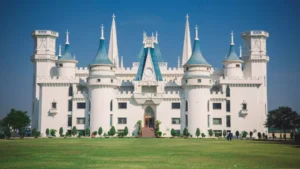
- Pathways School NoidaPrivate
- PSG Clifton International School, GurugramFrom ₹7,16,000 a year
Frequently asked questions
Is the IB Diploma recognised in India?
Yes. The Association of Indian Universities has recognised the IB Diploma since 1983 as an entry qualification to Indian universities. Some institutions ask for an AIU equivalence certificate.
How many IB schools are there in India?
The IB lists 276 IB World Schools in India on its country page (checked October 2026). 198 of them offer the Diploma Programme.
What is the maximum IB Diploma score?
45 points: up to 7 in each of six subjects plus up to 3 points for Theory of Knowledge and the Extended Essay.
Related reading
News and explainers about IB and school boards.
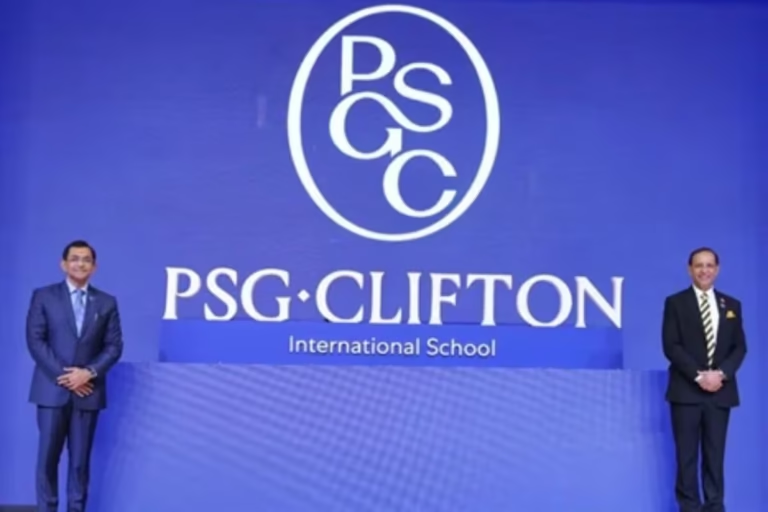 Pathways School Gurgaon is now PSG Clifton International School: what parents need to knowLighthouse Learning has taken over the Baliawas IB school and renamed it after a partnership with the UK's Clifton College. Here is…Read article →What a CBSE school’s public disclosure tells you before you applyEvery CBSE school must publish a Mandatory Public Disclosure. Here is what is inside, and the three things parents should check first.Read article →How to read a school fee structure, charge by chargeTuition is only part of the bill. How to turn a school's fee structure into one yearly figure you can compare.Read article →

Sources
- IB: India country page
- IB: facts and figures
- IB: Association of Indian Universities recognises the Career-related Programme (21 December 2021)
- IB: FAQs about the IB in India (PDF)
Figures are as published by the board or the cited source when checked. Spotted something out of date? Tell us. Have a question about IB? Ask us.